


US ends chip-sale debate, but China’s push to avoid American tech clouds prospects for new deals
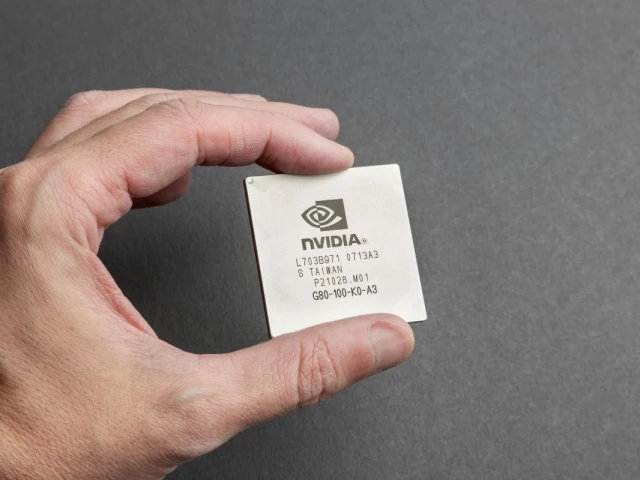
China hawks in Washington warn that advanced AI chips could accelerate Beijing’s military capabilities, the reason the Biden administration first imposed export limits. PHOTO: PIXABAY
The United States will allow exports of Nvidia’s H200 processors—its second-most advanced artificial intelligence chips—to China and will collect a 25% fee on such sales, U.S. President Donald Trump said on Monday.
The decision appears to conclude a U.S. debate over whether Nvidia and its rivals should preserve their global lead in AI chips by selling to China or withhold shipments to curb Beijing’s technological rise. It remains unclear whether Trump’s move will lead to new business, as Beijing has urged local firms to avoid US. technology.
Nvidia shares rose 2% in after-hours trading after Trump announced the decision on his Truth Social account, following a 3% rise during the day on a Semafor report. Trump said he informed China’s President Xi Jinping—whose government has put Nvidia chips under scrutiny—about the plan and that Xi “responded positively.”
He said the US Commerce Department was finalising the arrangement, which would also apply to Advanced Micro Devices and Intel. Trump wrote that the fee to be paid to the US government was “$25%,” and a White House official confirmed he meant 25%, higher than the 15% floated in August.
“We will protect National Security, create American Jobs, and keep America’s lead in AI,” Trump said on Truth Social. “NVIDIA’s US customers are already moving forward with their incredible, highly advanced Blackwell chips, and soon, Rubin, neither of which are part of this deal.”
Trump did not specify how many H200 chips would be authorised or what conditions might apply, only that exports would proceed “under conditions that allow for continued strong National Security.”
Balanching security and market power
Officials view the move as a compromise between banning all U.S. AI chip sales to China—an approach they fear could boost Huawei’s domestic AI chip push—and allowing exports of Nvidia’s latest Blackwell processors, which Trump has refused to permit, according to a person familiar with the discussions.
“Offering H200 to approved commercial customers, vetted by the Department of Commerce, strikes a thoughtful balance that is great for America,” Nvidia said in a statement. Intel declined comment, while the Commerce Department and AMD did not respond.
A White House official said the 25% fee would be collected as an import tax when chips are shipped from Taiwan, where they are manufactured, to the United States. They will undergo a security review before being sent onward to China.
Asked about the approval on Tuesday, China’s foreign ministry said Beijing believes cooperation with the United States should produce “mutual benefits.”
Fears of military strengthening
China hawks in Washington warn that advanced AI chips could accelerate Beijing’s military capabilities, the reason the Biden administration first imposed export limits. The Trump administration had been weighing approval for the deal, sources told Reuters last month. Trump said last week he met Nvidia CEO Jensen Huang and discussed export controls.
“It’s a terrible mistake to trade off national security for advantages in trade,” said Eric Hirschhorn, a former senior Commerce Department official under the Obama administration. “It cuts against the consistent policies of Democratic and Republican administrations alike not to assist China’s military modernization.”
A report from the non-partisan Institute for Progress said the H200 is almost six times more powerful than the H20—the most advanced AI chip currently legal for export to China after the Trump administration reversed a short-lived ban this year.
By comparison, Nvidia’s Blackwell processors used by U.S. companies are about 1.5 times faster than the H200 for AI training, and five times faster for inference tasks. Nvidia research indicates Blackwell could be up to 10 times faster for some workloads.
Several Democratic senators called Trump’s decision a “colossal economic and national security failure” that would boost China’s industry and military. Republican Representative John Moolenaar, chair of the House China Select Committee, said China would use the chips to build military power and replicate Nvidia’s technology. “China will rip off its technology … and seek to end Nvidia as a competitor,” he said.
China’s market response
In recent months, Beijing pressured local tech firms to avoid Nvidia’s downgraded China-market chips—the H20, RTX 6000D and L20—two sources said.
George Chen, partner at The Asia Group, said regulators may soften their stance after Trump’s comments about Xi’s reaction, especially as Washington and Beijing attempt to stabilise relations. The H200 would be “far more useful” to Chinese firms than the H20, he said.
“I expect state media to gradually change their narrative and be more welcoming to Nvidia,” he added.
Bo Zhengyuan of consultancy Plenum said Beijing would likely act cautiously but remain focused on self-reliance. “We don’t know how long this window can last. China will remain ultra-focused on gaining advanced chip-making capability of its own,” he said.

