


Archie MitchellBusiness reporter
 Getty Images
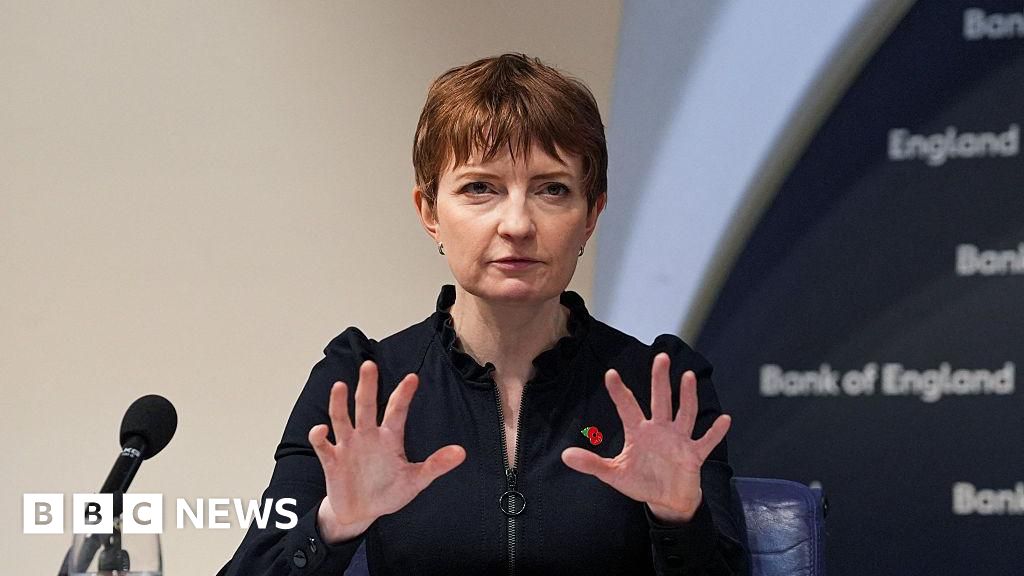
The chancellor’s Budget could reduce inflation by 0.5% next year, a Bank of England deputy governor has said.
Clare Lombardelli told the Commons’ Treasury committee that measures announced by Rachel Reeves in November will slow the rate at which prices are increasing from April 2026.
Speaking to MPs, Ms Lombardelli said capping fuel duty, cutting energy prices and freezing rail fares would bear down on price increases.
Official forecaster the Office for Budget Responsibility (OBR) has said the measures in Reeves’ Budget will reduce inflation by 0.4%.
UK inflation currently stands at 3.5%, with OBR forecasts suggesting it will drop to 2.5% next year, before returning to the Bank of England’s 2% target from 2027.
Asked about the impact of the Budget on inflation, Ms Lombardelli, the Bank’s deputy governor for monetary policy, said: “We think it will reduce inflation by between 0.4% and 0.5% for a year from the second quarter of 2026.
“That is purely a mechanical effect of the changes in energy prices, fuel duty, lesser electric vehicles and rail.
“That will just shift inflation. That is by far the biggest impact for us.”
In her second Budget as chancellor, Reeves extended a 5p cut in fuel duty until September next year. She also removed green levies from energy bills and general taxation in a move the Treasury said will save households £88 per year, while scrapping a customer-funded scheme to help low-income households insulate their homes, saving a further £59.
The government has also frozen rail fares until March 2027, the first freeze in decades. Typically rail fares rise in January based on the July rate of the retail price index (RPI) + 1%.
But the chancellor did announce plans to hit electric and some hybrid vehicle drivers with a new road tax.
From April 2028, electric car drivers will pay a road charge of 3p per mile, while plug-in hybrid drivers will pay 1.5p per mile, with the rates going up each year with inflation.
Ms Lombardelli’s comments will be a boost to Reeves as she seeks to bring inflation under control and ease cost of living pressures facing households.
Asked about how the Budget will impact economic growth, boosting which has been Labour’s number one mission since coming into government, Ms Lombardelli said “the effects are quite small”.
But she said there would be a “short-term” impact, adding 0.2% to GDP in 2027, adding that “there is an effect there”.
Conservative leader Kemi Badenoch has blamed the chancellor’s 2024 Budget for pushing up inflation, arguing it was “stoked by her tax and spend decisions”.

