


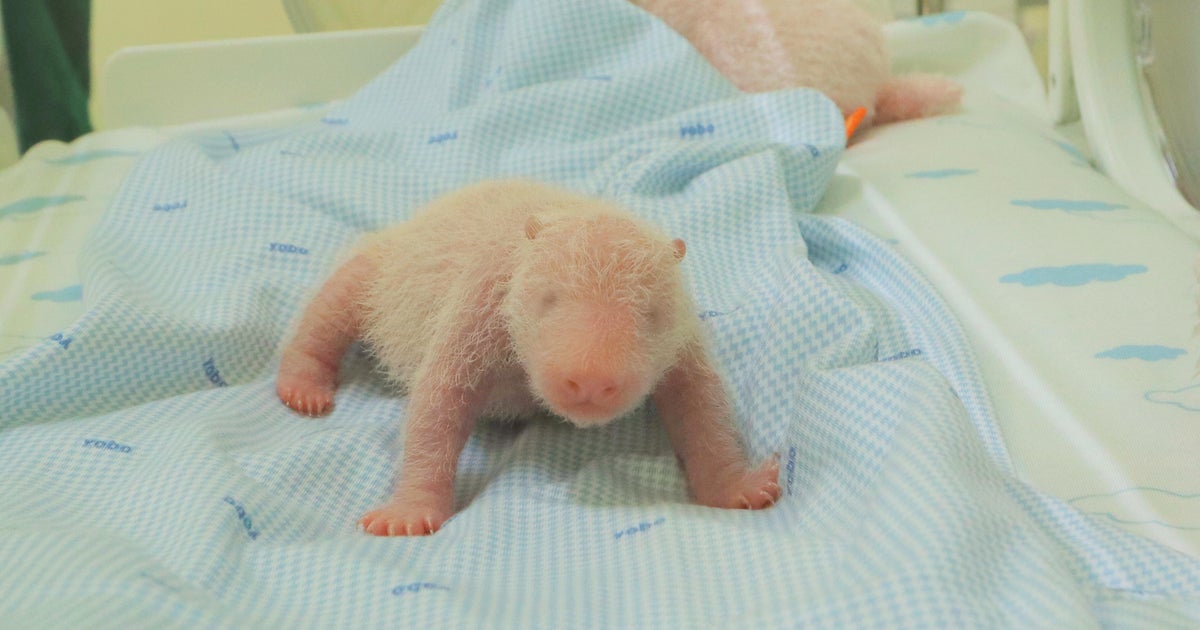
A zoo on Java island released photos of Indonesia’s first locally born giant panda cub, and said the male cub was showing signs of being in good health.
The mother, 15-year-old Hu Chun, gave birth to Satrio Wiratama — nicknamed Rio — on November 27 at the zoo’s facility in Cisarua, West Java province.
The name symbolizes the hope, resilience, and shared commitment of Indonesia and China in protecting endangered species, Taman Safari Indonesia said in a statement Sunday.
“This birth is the result of a long-term international cooperation program that has been ongoing for a decade, since the arrival of giant pandas Hu Chun and Cai Tao to Indonesia in 2017 as part of a 10-year conservation partnership with China,” said the statement.
Rio is in stable condition and under 24-hour monitoring by the zoo’s team, showing healthy early signs such as strong vocalization, effective nursing and steady weight gain. Over the next one to two months, he is expected to develop better temperature control, fur growth, open his eyes and begin early motor movements, the zoo said.
Taman Safari Indonesia via AP
“At this early stage, the baby panda is not yet accessible to the public. Taman Safari Indonesia will continue to prioritize the health and welfare of the mother and her baby, and invites the public to join in praying for the baby panda’s development so that it remains healthy and safe in the early stages of its life,” it said.
Indonesian President Prabowo Subianto announced the baby panda’s name on Thursday and showed his photo when he met Wang Huning, a top Chinese political advisor and leading ideologist.
Cai Tao and Hu Chun, a pair of giant pandas who arrived in Indonesia in 2017, live in a “palace-like” home that was built for them at the Taman Safari zoo, which is located around 43 miles from Jakarta.
Pandas are widely considered China’s unofficial national mascot, and its giant panda loan program with overseas zoos has long been seen as a tool of Beijing’s soft-power diplomacy, also known as “panda diplomacy.”
Giant pandas have difficulty breeding, and births are particularly welcomed. There are fewer than 1,900 giant pandas in their only wild habitats in the Chinese provinces of Sichuan, Shaanxi and Gansu.
These pandas live primarily in forests in the mountains of southwestern China. Concerns over dwindling panda populations peaked during the early aughts, triggering conservation efforts that eventually led to their reclassification as “vulnerable,” rather than “endangered,” species just a few years ago.
“The living conditions of China’s rare and endangered species have seen notable improvements amid the country’s active efforts on biodiversity protection and ecological restoration,” China’s State Council Information Office said in 2021, when the country announced giant pandas were no longer endangered as more than 1,800 were living in the wild.
Bringing giant pandas back from the brink of extinction has been a priority for scientists, especially in recent years, and learning how to keep baby pandas alive has been a big part of their quest to successfully do that. As 60 Minutes reported in 2020, raising a baby panda takes a lot of work.
Because pandas’ gestation periods are short, babies are born small, weighing just a few ounces. Newborns are pink, hairless and cannot open their eyes for weeks.

