


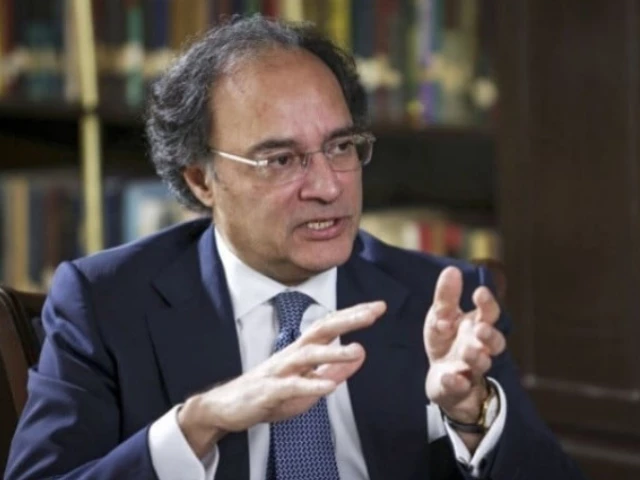
Pakistan has achieved a staff-level agreement with the International Monetary Fund (IMF) for its second loan review, with the board expected to approve the next tranche in early December, Finance Minister Muhammad Aurangzeb said on Wednesday. Speaking at the ninth Future Summit in Karachi, he underlined the government’s shift toward an investment-driven economic model, led primarily by the private sector.
Aurangzeb said investor confidence was strengthening, adding, “Our direction is right.” He confirmed that Google had decided to open an office in Pakistan and was considering the country as an export hub. A blockchain centre has also been established at the Lahore University of Management Sciences (LUMS) as part of a broader focus on emerging technologies.
The minister said fiscal reforms had progressed steadily over 18 months, with efforts underway to expand the tax base using artificial intelligence. “The sugar sector is now digitised, and the cigarette sector will follow,” he said, adding that 900,000 new tax filers had been registered.
Read: Google begins local Chromebook assembly in Pakistan
He also noted interest from Egypt in adopting Pakistan’s reform model, while the privatisation of Pakistan International Airlines (PIA) was on track for completion by the end of the year. Recent UAE investment in a Pakistani bank signalled “the beginning of a new era,” Aurangzeb said.
Separately, Federal Minister Musadik Malik emphasised the need for equal opportunities and fair competition in Pakistan’s economic landscape. Addressing the same summit, he said sustainable development depended on breaking elite dominance and fostering a competitive, innovation-driven economy.
“The aspirations of our youth are simple,” Malik said. “They want good jobs, safe neighbourhoods and basic services.” He argued that macroeconomic figures such as GDP growth held little relevance for the average Pakistani, who was more concerned about education, healthcare, pollution and urban flooding.
Malik warned that environmental challenges, including smog in Lahore and flooding in Karachi, were shortening life expectancy by up to eight years. “Butterflies and fireflies are gone; everything is ruined,” he said, calling for urgent reforms in healthcare, education and local governance. He highlighted high unemployment among young doctors and the lack of primary healthcare facilities, saying global models showed such problems could be addressed.
Read more: Pakistan likely to get $1.2b IMF tranche
The minister stated that innovation requires competition and that protectionist policies and preferential access to energy for certain sectors hinder exports and foreign investment. “If the elite dominates society, how will businesses grow?” he asked, urging an end to privilege-based policymaking.
Aurangzeb and Malik both underscored that Pakistan’s future economic resilience depended on competitiveness, youth empowerment and the effective use of external funding, including for climate resilience. Both stressed the importance of focusing on emerging sectors, technology and innovation to build a sustainable, inclusive economic model.

